
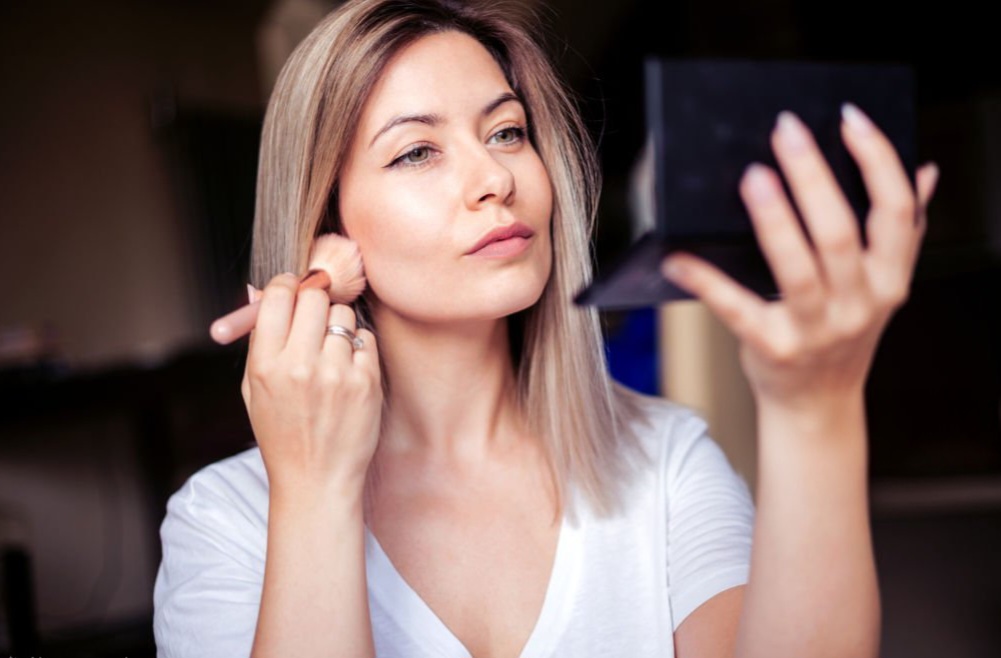
Have you ever used the same makeup products you’ve loved for years—only to look in the mirror and wonder why they suddenly don’t look quite the same?
You’re not imagining it.
As we get older, our skin changes.
It can become drier, texture can become more noticeable, and fine lines may appear where they weren’t visible before.
That doesn’t mean you need to stop wearing makeup.
It simply means that some makeup techniques that worked beautifully in your 20s and 30s may need a little adjustment.
The goal isn’t to cover your skin.
It’s to make it look fresh, healthy and radiant.
Here are some simple changes that can make a big difference.
1. Start With Well-Hydrated Skin
Good makeup starts before you even pick up your foundation.
If your skin is dry or dehydrated, makeup can settle into fine lines and emphasize texture.
Before applying makeup, give your skin a little preparation.
A simple routine might be:
Moisturizer → sunscreen → makeup
If your skin needs extra hydration, you can also use a hydrating serum underneath.
Give your skincare a few minutes to settle before applying foundation.
You don’t want to create a thick layer of products underneath your makeup.
2. Don’t Automatically Reach for Full-Coverage Foundation
This is one of the biggest changes that can make mature skin look fresher.
Heavy foundation can sometimes make texture more noticeable.
Instead, try using a lighter layer and adding coverage only where you actually need it.
You may find that your skin looks much more natural.
Remember:
You don’t need to cover every little imperfection to look polished.
Letting some of your natural skin show through can actually make your makeup look more youthful and modern.
3. Use Concealer Strategically
More concealer doesn’t necessarily mean fewer visible imperfections.
In fact, putting a thick layer of concealer under the eyes can make fine lines more noticeable.
Try using a small amount where you actually need it.
You can also concentrate coverage around areas of redness or pigmentation rather than applying a heavy layer everywhere.
And always blend carefully.
4. Be Careful With Powder
Powder can be useful, especially if you have areas that become oily.
But too much powder can make mature skin look dry or emphasize texture.
Instead of automatically powdering your entire face, try applying a small amount only where you need it.
For many people, keeping the skin around the cheeks and under-eye area less powdered can create a fresher appearance.
5. Don’t Be Afraid of Blush
As we get older, the complexion can sometimes look less naturally flushed.
That’s where blush can make a surprisingly big difference.
A little color on the cheeks can make the entire face look more awake.
Cream or lightweight formulas can work beautifully on drier skin, although the best texture depends on your skin type and personal preference.
The key is not too much.
You want a healthy-looking flush, not a stripe of color.
6. Reconsider Where You Apply Blush
You don’t necessarily have to follow every makeup rule you’ve learned over the years.
Experiment with placing blush slightly higher on the cheeks and blending it outward.
This can create a more lifted-looking effect.
But don’t obsess over exact placement.
Your face is unique.
The best placement is the one that makes you feel good when you look in the mirror.
7. Keep Your Eyeliner Soft
Very heavy, harsh eyeliner can sometimes make the eyes look smaller or more tired.
Try a softer line instead.
You can use a pencil and gently smudge it, or use a softer shadow along the lash line.
And don’t feel that you have to completely outline the eye.
Sometimes less creates a more open, effortless look.
8. Give Your Brows Some Attention
Brows frame the entire face.
As we age, brows can sometimes become thinner or less defined.
You don’t need an extremely dramatic brow.
A softly filled-in brow can make the face look more balanced and polished.
Choose a shade that blends naturally with your hair and use light strokes rather than creating a solid block of color.
9. Choose Lip Products for Comfort
Lips can become drier with age, so a very matte lipstick may emphasize texture or feel uncomfortable.
You don’t have to give up matte lipstick completely.
But if your lips tend to be dry, you may prefer:
- Creamy lipstick
- Satin finishes
- Tinted balms
- Hydrating lip colors
And don’t be afraid of color.
A flattering lip shade can instantly make the face look more vibrant.
10. Don’t Forget the Neck
If you’re wearing foundation or complexion makeup, remember that your face and neck should look like they belong together.
You don’t necessarily need to cover the entire neck with foundation.
Instead, make sure there isn’t an obvious difference between the face and neck.
And remember that sunscreen isn’t just for your face.
The Under-Eye Area Deserves Special Attention
The skin around the eyes is delicate, and makeup can easily settle into fine lines.
Before concealer, make sure the area is comfortably moisturized.
Then use a small amount of concealer and blend it carefully.
If you have very dry under-eyes, avoid applying excessive powder.
And don’t feel that you have to completely erase every line.
Some lines are simply part of having a face that moves.
The goal is to brighten the area—not make it look completely flat.
What About “Anti-Aging” Makeup?
You may see makeup marketed specifically as:
“anti-aging,”
“lifting,”
or
“age-defying.”
Sometimes these products contain useful ingredients or have formulas designed for mature skin.
But don’t assume that a product will make you look younger simply because the packaging says so.
Look at the actual formula and finish.
Ask yourself:
Does it hydrate?
Does it sit comfortably on my skin?
Does it emphasize texture?
Do I actually like how it looks after a few hours?
Your mirror is often more useful than the marketing claims.
My Youthful & Radiant Makeup Rule
Don’t try to make mature skin look like teenage skin.
Instead, aim for:
hydrated + even + softly defined + radiant.
That usually looks much more beautiful than heavy coverage.
And don’t be afraid to let your skin look like skin.
A little texture is normal.
A few lines are normal.
And neither one prevents you from looking gorgeous.
The Bottom Line
The best makeup for mature skin isn’t necessarily the most expensive makeup or the makeup marketed specifically to women over 40.
It’s makeup that works with your skin rather than against it.
Use lighter layers.
Hydrate first.
Be strategic with concealer.
Go easy on powder.
Add a little color.
Define your features softly.
And most importantly, don’t feel that you need to hide every sign that you’ve lived.
Makeup should enhance your face—not erase it.
At Youthful & Radiant, that’s the approach I love most:
Look fresh. Feel confident. Still look like you.
Note: This article is for general beauty information. Makeup and skincare needs vary from person to person, so adjust these suggestions according to your skin type, preferences and comfort.


Leave a Reply